The Permission Slip My Mother Left Me
On caregiving, guilt, and learning to hold both things at once.
Friends,
My dog has bone cancer.
I’m still getting used to saying that out loud. He’s been my shadow through everything — transitions, meltdowns, the whole pandemic, my mom’s death. And now we’re in it with him. Doing what you do. Vet appointments, hard decisions, the specific grief of watching someone you love decline.
At the same time, my parents are getting older. Not sick yet — but I can feel the shift.
Before my mom passed, she told me something I’ve been turning over ever since: stay focused on your maturing family. She meant our kid. Our home. Our life right now. She had watched caregiving swallow people whole — the ones who pour themselves so completely into a sick loved one that when it’s over, they look up and realize they lost themselves too. She didn’t want that for me.
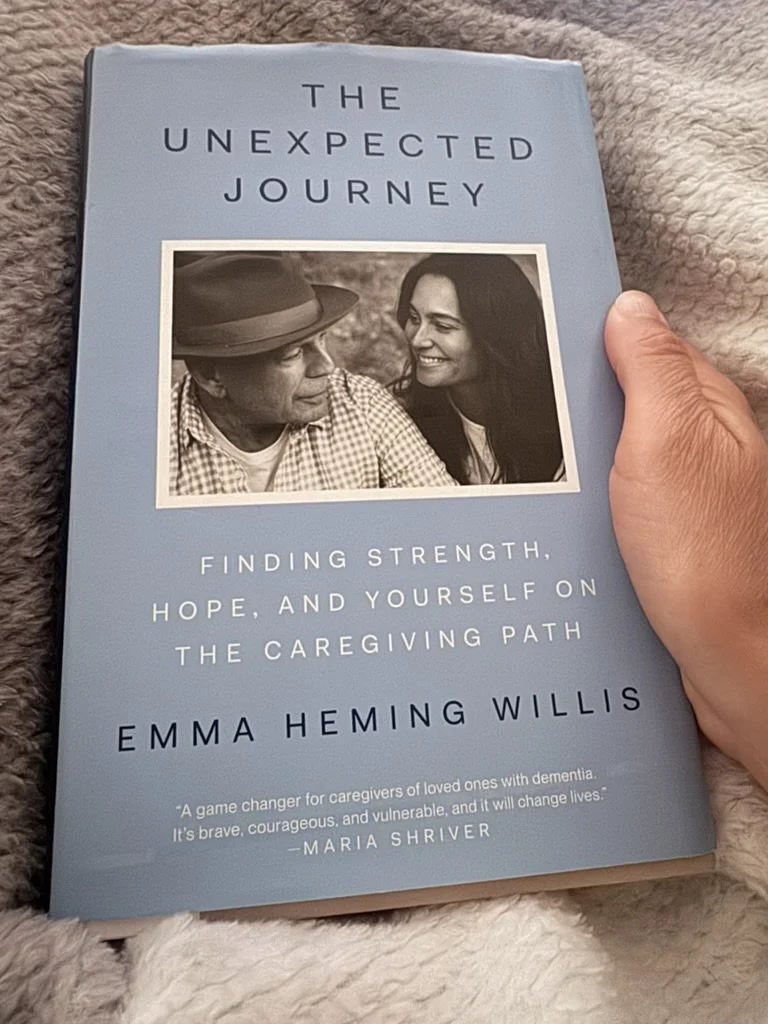
So when I saw The Unexpected Journey by Emma Willis, something made me pick it up.
What I found inside felt less like advice and more like a hand on my shoulder.
Here’s what landed:
We are on emotional WiFi with the people we love. When I’m dysregulated — anxious, scattered, running on fumes — the people around me feel it. My kid feels it. My dog feels it. The most useful thing I can do for the ones I love is regulate myself first. Not as a luxury. As the actual work.
Both things can be true at once. I can be heartbroken about my dog AND still have a good day. I can be scared about my parents AND still show up to dinner with friends and laugh until I cry. This is called Both/And thinking, and it is the opposite of guilt. Guilt says you can only hold one. Both/And says you’re allowed to hold everything.
“Stay here. Don’t go there.” When my mind starts time-traveling into worst-case scenarios — which it does, daily — I come back with this. Four words. It doesn’t fix anything. But it stops the spiral long enough for me to breathe.
What I keep coming back to is the question Emma poses that stopped me cold: Would they want you to stop living?
I know what my mom would say.
She didn’t give me that advice to protect herself. She gave it to protect me. She had already seen what grief and caregiving can do — how they quietly become your whole identity if you let them. She wanted me to keep going. To stay in my life. To not confuse devotion with disappearing.
Picking up this book felt like honoring that.
If you’re in a hard season right now — caring for someone, watching someone change, holding more than feels possible — I’m not going to tell you it gets easier. I don’t know that yet. But I do know that taking care of yourself isn’t a betrayal. It’s the only way you stay whole enough to keep showing up.
Stay here. Don’t go there.
The Reflection: What would the person you’re caring for actually want for you — and are you giving yourself permission to want it too?
With you in it, Andrea
