China — The Self in a Suitcase 🏮☁️
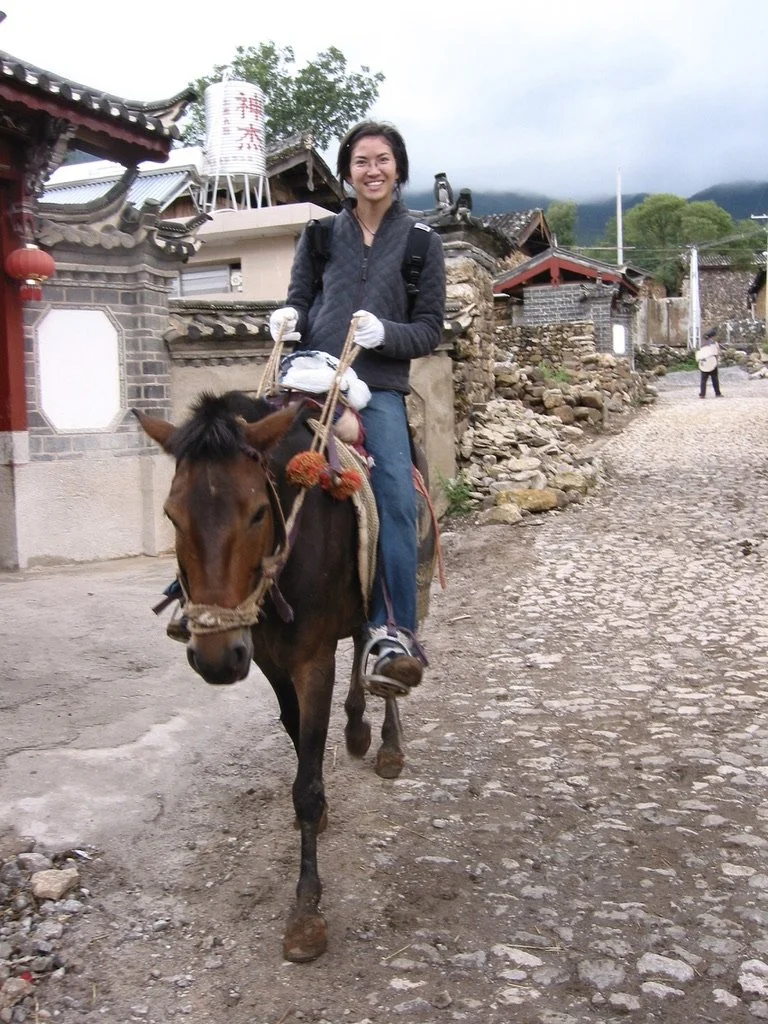
In 2005, I packed that same suitcase and moved to Northern China.
I am half-white and half-Chinese, and growing up, I never felt like I fully belonged to either side. I was terrified that when my grandparents passed, my heritage would disappear. I went to Tianjin to find where I sat on the “scale of being Chinese.”
Again, I traveled with one suitcase. But this time, the exploration wasn’t of the world—it was of myself.
Stripping to the Core
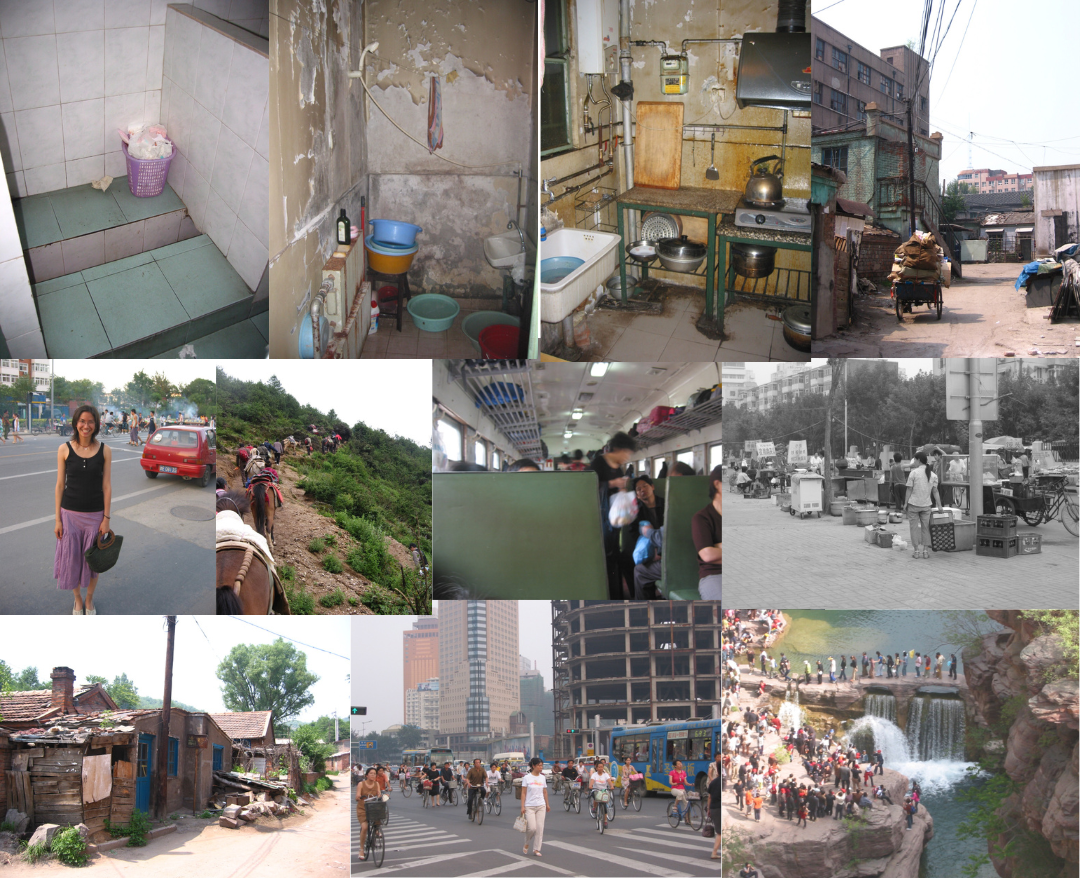
For six months, I checked “Andrea” at the door. I went by my Chinese name. I lived in a room with a hard bed and starched hospital sheets stamped in red ink. Life was “bare minimum” in a way that felt like a “System Reset.”
The Grit: I survived 10-hour train rides on wooden benches, “poop troughs” in train stations, and leeches crawling up my poncho on a donkey ride up a mountain.
The Loneliness: I felt the profound weight of being a stranger in my own “heritage” land. The time difference meant my “usual” support system was sleeping while I was struggling.
The Hum: I found my “home” in a Sunday McDonald’s sundae. It was a tiny, cold experience that signaled safety to my nervous system when everything else felt high-voltage.
The Internal Hardware
The locals called me “Old China” because I valued traditions they were moving past. That was the moment I realized that tradition is a twist. It’s a version of a story or a habit you hold in your heart. It’s internal hardware—part of your being.
I didn’t need a suitcase full of heirlooms to be Chinese. I just needed to be me.
The Resilience of Enough
Today, as I navigate the overwhelming process of dealing with my parents’ belongings, I think back to those hospital sheets in Tianjin.
I realized then that I can live with the bare minimum—stripped to the core—and still find joy in the small things. Seeing my mom leave everything behind as she aged taught me the final lesson: We don’t take the stuff with us, so why fret over it while we are living?
I’m donating 180 items this year because I want to trust my “internal hardware” again. I don’t need the physical object to hold the love or the history. The traditions I value are already part of me, and they will pass down to the next generation with my own “family twist.”
I’m letting go of the pile so I can focus on the presence.
